

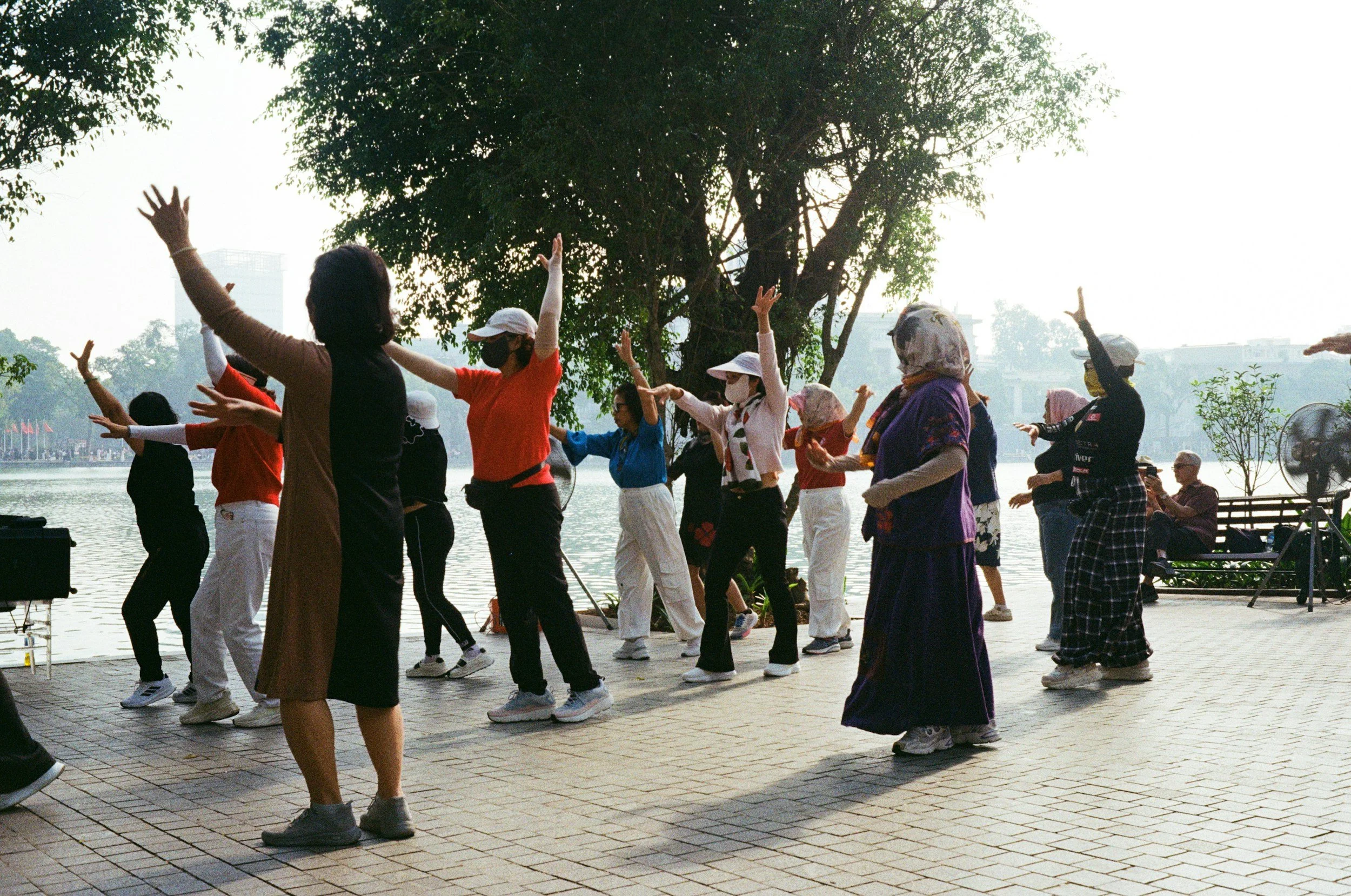
If you picture senior living as a place where life slows down, it's time for a new picture.
Today's older adults aren't looking to fill their days; they're looking to enrich them. They're taking classes, learning new technologies, debating current events, picking up creative pursuits, and finally chasing interests they never had time for during their working years.
At Friends Village, we've noticed something we didn't expect: curiosity doesn't fade with age. It grows.
Aging Well Means Continuing to Grow
For a long time, conversations about aging centered almost entirely on health care. Good medical care still matters, of course, but well-being has always been about more than physical health. The World Health Organization defines healthy aging around a person's "functional ability" and notably, two of its five core domains are the ability to keep learning and growing and the ability to build and maintain relationships, alongside physical mobility and independence.
That shift changes the question a senior community should be asking. It's not just "how do we care for older adults?" It's "how do we help people keep becoming who they want to be?"
Lifelong Learning Has No Age Limit
There's something energizing about learning something new — whether it's understanding how AI actually works, improving balance through yoga, identifying local wildflowers on a walk, or figuring out a digital wallet for the first time. Every new skill builds a little confidence along with the knowledge.
That's not just a feeling — it shows up in research, too. A study published in The Journals of Gerontology followed older adults who spent several months learning multiple new real-world skills at once, such as a foreign language, drawing, and music composition. Participants who took on this kind of active, sustained learning showed measurable gains in cognitive performance compared to those who didn't.
Learning also opens the door to something just as valuable: connection. A question sparks a conversation. A conversation turns into a friendship. Enough friendships, and you've got a community.
The Power of Good Conversation
Not every meaningful moment happens in a classroom. Sometimes it starts over coffee: a debate about the morning's headlines, a shared memory, a respectful disagreement that leaves everyone thinking a little differently than when they sat down.
As people grow older, chances for this kind of regular conversation can get harder to come by, especially after retirement or the loss of a spouse. The National Institute on Aging notes that staying socially connected is one of the strongest supports for both mental and physical health in later life, and that older adults who spend regular time with others tend to fare better than those who don't. A 2024 AARP survey backs this up directly: 74% of adults age 50 and older said in-person socializing was key to their happiness. Conversation isn't just something to pass the time; it's how we keep learning from each other and maintaining the social connections that support healthy aging.
Curiosity Creates Community
One of the underrated benefits of lifelong learning is how naturally it brings people together. The person next to you in a technology class might become your regular lunch companion. Someone from a lecture might invite you into a walking group. A conversation about history can lead to an unexpected friendship built on a shared love of gardening or music.
Communities don't come alive because of their buildings. They come alive because people have reasons to gather — and curiosity is one of the best reasons there is.
A Different Kind of Senior Living
At Friends Village, our calendar reflects what we believe about aging: wellness classes that build movement and confidence, educational programs that invite genuine curiosity, discussions that take on timely topics with openness and respect, creative outlets that spark imagination, and gatherings where laughter matters as much as the lesson.
Some residents come to improve their balance. Some come to learn something new. Others simply come because they enjoy being around people who are just as curious about the world as they are. There's no single right reason to join in — just an open invitation to keep growing.
The Best Chapters Are Still Ahead
Maybe the biggest misconception about aging is that it's a season of endings. We see it differently: as a season of discovery. A time to ask new questions, learn new skills, meet new people, and stay curious.
A life full of curiosity is rarely a life standing still. Maybe that's the real shift in senior living — not just adding years to life, but adding life to every year.
Frequently Asked Questions
-
There's real evidence behind it. A study in The Journals of Gerontology found that older adults who spent months actively learning several new skills — not just one — showed measurable improvements in cognitive performance, more so than those who stuck to passive or single-task activities. The key seems to be sustained, active engagement rather than any one specific hobby.
-
More than many people expect. The National Institute on Aging identifies staying socially connected as one of the core supports for both mental and physical health in later life. A 2024 AARP survey found that nearly three-quarters of adults 50 and older point to in-person socializing as central to their happiness — ahead of most other factors people typically assume matter more.
-
The World Health Organization's framework for healthy aging is built around five domains, and physical health is only one of them. The others include the ability to keep learning, make decisions, build relationships, and contribute — which is why communities that only focus on care miss a big part of what makes later life feel full.
-
Beyond care quality, look for a genuine calendar of ongoing classes and discussions (not just occasional events), regular opportunities for residents to socialize outside of scheduled programming, and a culture that treats residents as people still growing — not just people being looked after.